How to play padel: the rules explained for beginners
To play padel, you need four players, two rackets a side and a 20 by 10 metre court with glass walls. You serve underarm and diagonally, after one bounce. The ball must bounce on the other side before touching their walls, and you can play it off your own glass. You lose the point if it bounces twice on your side.
Key takeaways
- Always doubles, on a 20 by 10 metre court with glass back walls
- Serve underarm, at or below waist height, diagonally into the box
- The ball must bounce on the other side before it touches their walls
- You may play the ball after it comes back off your own glass
Padel looks like tennis in a glass box, and that is a good way to start. The scoring is the same, the strokes feel familiar, and the walls are what make it different. Here are the rules you need for your first game, in the order you will meet them.
How to play padel in five steps
- Find three other players. Padel is always doubles, two against two.
- Serve underarm. Bounce the ball behind the service line and hit it at or below waist height, diagonally into the box.
- Let it bounce once on their side. The ball has to land in the other court before it touches their walls.
- Use your own walls. After it bounces on your side, you can play it off your back or side glass.
- Score like tennis. 15, 30, 40, game; six games for a set. See how padel scoring works.
Padel is sometimes called "padel tennis" in the UK: it is the same game.
What does a padel court look like?
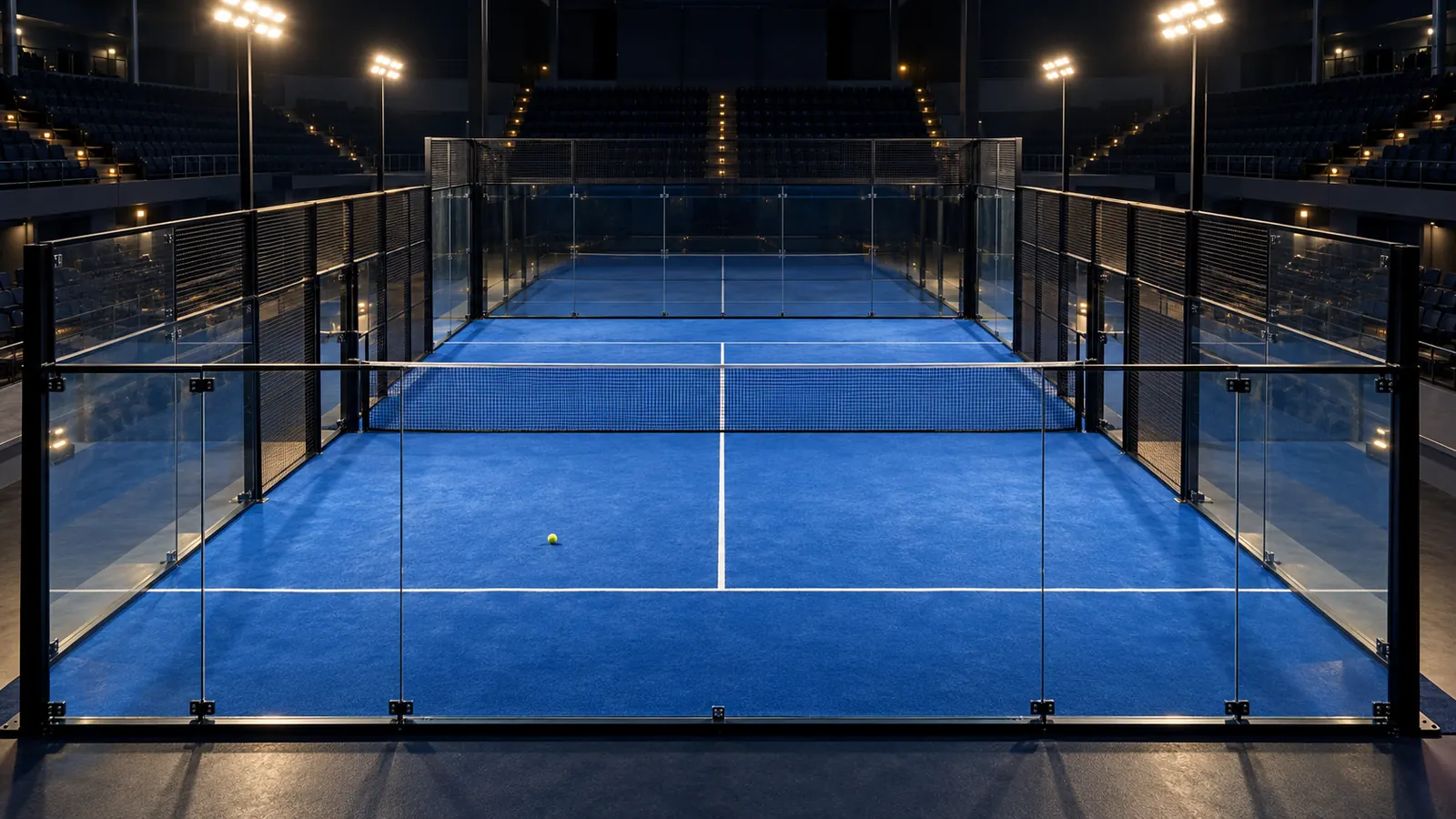
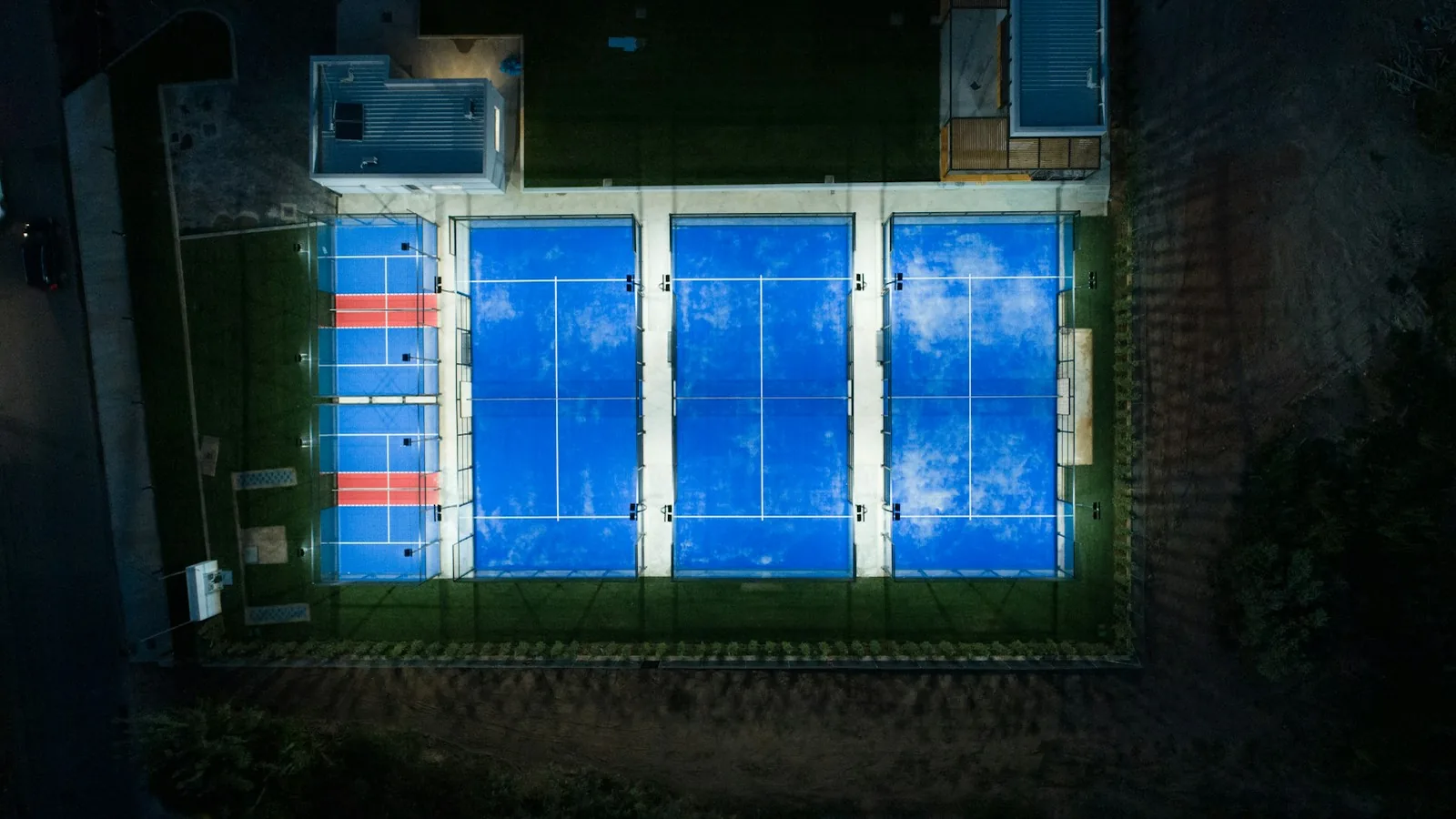
A padel court is 20 metres long and 10 metres wide, with a net across the middle. The back walls are glass, and the sides are part glass, part wire mesh. Each half has two service boxes, marked by a service line about 7 metres from the net and a centre line.
You always play doubles: two against two. Rackets are solid, with holes and no strings, and the balls look like tennis balls with slightly less pressure.
How do you serve in padel?
Every point starts with an underarm serve:
- Stand behind the service line, with at least one foot behind it when you hit (the rule since January 2026).
- Bounce the ball once behind the service line, then hit it at or below waist height.
- Serve diagonally, into the service box opposite you.
- Start each game from the right-hand side, then alternate sides every point.
You get two attempts. The serve is a fault if it lands outside the box, hits your partner, or bounces in the box and then hits the wire mesh. If it bounces in the box and then hits the glass, it is in.
How do the walls work?
This is the rule that makes padel padel: the ball must bounce once on the other side before it touches their walls. After that bounce, it can come off any glass, and your opponents can keep playing it.
On your own side:
- After the ball bounces, you can let it come off your back or side glass and play it on the way out. Beginners often find this the hardest habit to learn and the most fun once it clicks.
- You can hit the ball against your own glass to get it over the net, as long as it crosses without bouncing first. Usually a last resort, sometimes a clever shot.
- If you hit the ball straight into the opponents' glass or mesh without it bouncing on their side first, you lose the point.
How do you win and lose points in padel?
You win the point when the ball bounces twice on the other side, when your opponents hit it into the net, into their own mesh, or straight out of the court, or when it touches one of them.
You lose the point when:
- the ball bounces twice on your side;
- you hit it into the net, or onto the other side's walls or mesh before it bounces;
- it touches you or your partner (anywhere except the racket);
- you touch the net with your body or racket;
- you hit the ball twice, or both partners hit it.
Can you volley in padel?
Yes, with one exception: the return of serve must bounce. After that, you can volley anywhere. Most points are won at the net, so expect to move forward as soon as you can.
How is padel scored?
Exactly like tennis: 15, 30, 40, game; six games, two clear, to win a set; usually best of three sets. At 40-40 most clubs play golden point, where the next point wins the game. Our guide to how padel scoring works covers deuce, golden point, the new star point and tie-breaks.
What do you need for your first game?
Trainers with good grip (padel or tennis shoes with a herringbone sole are ideal on artificial grass), sports clothes and water. Most UK clubs rent rackets and sell balls at reception. Book a 60 or 90 minute court, or join an open game at your level.
The XPLAY app shows courts and open games at clubs near you, and gives you XPLAY Points for playing. If you run a padel club, XPLAY for clubs sets up bookings, coaching and socials with no monthly fee.
Play at
your level
Find courts and open games at every club near you, and earn XPLAY Points every time you play. Free app.
Questions people ask
Can you play padel one against one?
Padel is designed for doubles and almost every club books courts for four players. Some clubs have narrower single courts, but they are rare in the UK.
Can you volley the serve in padel?
No. The return of serve must bounce first. After the return, volleys are allowed anywhere on the court.
Can the ball hit the walls on my side?
Yes. Once the ball has bounced on your side, it can come off your back or side glass and you can still play it. You can also hit it against your own glass to send it over, as long as it reaches the other side without bouncing.
Do I need my own racket to start?
No. Most UK clubs rent rackets and sell balls at reception, so you can turn up in trainers and sports clothes for your first game.
Is padel the same as padel tennis?
Yes. "Padel tennis" is a common UK name for padel. It is played in pairs on a smaller, walled court with a solid racket and an underarm serve.
Sources
Javi builds XPLAY, the UK app that connects padel players, clubs and tournament organisers.